


Top Eleven Be a Soccer Manager
Nordeus
I approached Top Eleven Be a Soccer Manager expecting a light football game, but its real appeal is closer to running a small club over time. You are not mainly controlling players during a match. You are making decisions before the whistle, watching those decisions produce results, collecting the consequences, and then adjusting the team for the next challenge. That makes it a sports game with a noticeably strategic rhythm rather than a quick arcade title.
Developed by Nordeus, this free game sits in the football-management corner of the Sports category. It has been available since October 19, 2011, and its long life is easy to understand once the loop clicks: there is always another fixture, another squad decision, another weakness to address, and another reason to check whether yesterday’s plan worked. I found it most enjoyable when I treated it as a continuing club project instead of trying to finish everything in one sitting.
How the manager’s loop keeps pulling you back
The first action is choosing what deserves attention
The first meaningful decision is rarely dramatic. It may be deciding which part of the squad needs work, considering who should start, or preparing for the next opponent rather than simply selecting the strongest names available. That slower beginning is important because the game wants you to think like a manager, not like a player waiting for direct control.
I like that this creates a different kind of football tension. In a conventional mobile football game, I might immediately pass, sprint, shoot, and blame myself for a missed chance. Here, responsibility is spread across preparation and selection. If the result goes badly, I have to consider whether the lineup, balance, tactics, or timing of my choices contributed. That makes even a short visit feel purposeful.
The best early habit is to avoid changing everything at once. If I alter the formation, replace several starters, and make broad tactical changes after one poor result, I lose the ability to understand what actually helped. A more useful workflow is to identify one clear problem, make a measured adjustment, and watch the next match for evidence. It feels less exciting than constant tinkering, but it produces better decisions.
Related News

Why WhatsApp Messenger Still Makes Everyday Communication Feel Easy

Jurassic World: The Game Is the Better Dino Tycoon for Strategic Players

Threads in Real Life: Who Should Join, Lurk, or Leave

How SHEIN Turned Shopping Into an Endless Content Feed

How to Make Fortnite Feel Smarter on Mobile

Should You Switch to Microsoft Outlook on Mobile?
This is also where the game separates casual interest from genuine management curiosity. Someone who enjoys comparing roles, weighing risk, and building a plan will find plenty to think about. Someone who only wants to control every touch of the ball may feel that the important action happens at a distance. That is not a flaw in execution; it is the central design choice.
Matches provide feedback rather than total control
Once a match begins, the feedback rhythm becomes the heart of the experience. I watch for signs that my preparation is working, then use what I see to judge whether the original plan was sensible. A strong result feels like confirmation, while a poor one becomes useful only if I resist the urge to treat it as random bad luck.
That rhythm is more satisfying when I pay attention to patterns instead of isolated moments. A single defeat does not automatically prove that the team is badly built. Likewise, a win does not mean every decision was correct. I found it more productive to ask whether the same weakness keeps appearing and whether the squad is being asked to do something it is not suited to do.
Gallery
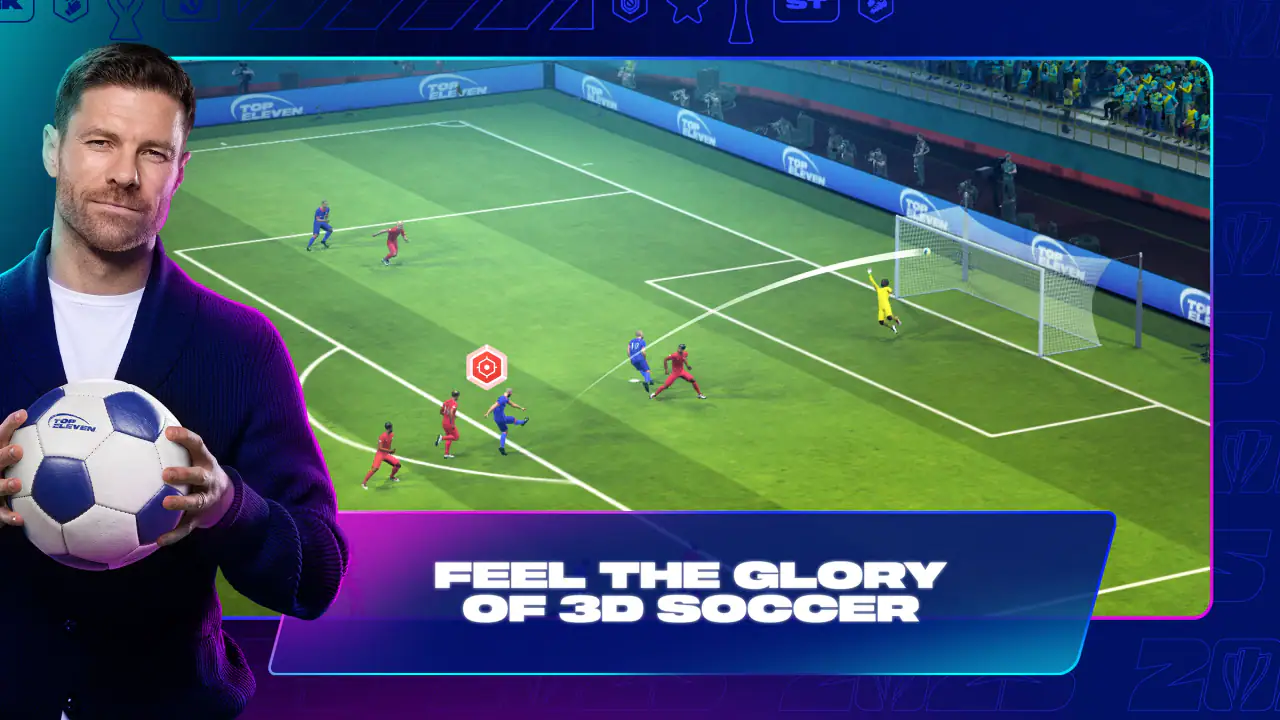
The game’s feedback is especially valuable for players who enjoy gradual improvement. You make a choice, receive a result, interpret it, and return with a revised idea. The reward is not only the match outcome; it is the growing confidence that I understand my team a little better than before.
There is a trade-off here. Because the experience is built around management decisions, it can feel less immediately expressive than hands-on football games. I cannot rescue every attack with a perfectly timed manual move. If I prefer direct skill-based control, the feedback may seem too indirect. If I enjoy seeing a plan tested, the distance creates the appeal.
Rewards feel useful when they support a longer plan
Progress works best when I connect each reward to a specific club need. Rather than treating every improvement as automatically valuable, I try to decide whether it solves a current weakness, protects a position that lacks depth, or helps the squad remain competitive over several matches. That simple change in mindset makes the reward system feel less like collecting items and more like allocating limited attention.
The free-to-play structure deserves a realistic explanation. The game costs nothing to start, while in-app purchases range from $0.49 to $249.99 per item. I would not recommend spending simply because a result was disappointing. A loss can tempt a player to accelerate progress, but that often removes the most interesting part of the game: learning how to work with the situation already in front of you.
For me, the better approach is to establish a personal boundary before playing. Decide whether you are comfortable remaining fully free, making occasional small purchases, or avoiding optional spending altogether. The game can be approached casually, but players who are sensitive to progression pressure should pay attention to how often they feel encouraged to speed things up. That feeling matters more than any individual offer.
One non-obvious strength is that rewards become more meaningful when they are delayed. I do not always need to use a useful resource immediately. Saving it for a clearly important squad problem can create a stronger advantage than spending it on a minor improvement just because it is available. This turns patience into part of the strategy, which suits the manager theme surprisingly well.
The reset is what makes the next session worthwhile
Every completed match creates a reset point. The immediate story is over, but the club is not finished. I review what happened, reconsider the next opponent, and decide whether the next session should focus on preparation, squad improvement, or simply checking the outcome of a plan already in motion.
This reset is not a hard restart. It is more like closing one management question and opening another. Did the chosen approach produce the expected result? Did a weak area remain exposed? Is the next decision urgent, or would leaving the squad alone be wiser? Those questions give short visits a natural shape, especially when I only have a few minutes to check in.
A realistic everyday scenario is a commute or lunch break. I can open the game, review the club’s current situation, make one careful decision, and leave without needing to complete a long action sequence. Later, I return to see whether the choice held up. The experience fits that pattern better than a game that demands uninterrupted concentration for a full match.
That same design can become a weakness for players who want a clear endpoint. There is no obvious moment when the managerial work is permanently complete. The satisfaction comes from continuing the cycle, so anyone looking for a compact campaign with a final conclusion may prefer a traditional single-player football title.
Where it fits among football alternatives
Compared with arcade football games, this one offers less direct control and more responsibility before the match. The reward is a stronger sense of ownership over the club’s direction, but the cost is that a brilliant manual play cannot compensate for every questionable decision. Players who value reflexes and constant movement may find the pace restrained.
Compared with deeper management simulations, it is easier to approach in short sessions. I do not need to treat every visit like a spreadsheet exercise. The decisions are understandable enough for a casual player to follow, while still leaving room for people who enjoy testing different approaches. That middle ground is one of its clearest strengths.
It also differs from purely collection-focused football games. Building a squad is part of the attraction, but the more lasting interest comes from deciding how that squad should be used. A new player or improvement matters most when it changes the way I can prepare for upcoming matches, not merely because it looks impressive in isolation.
I would choose this game over a direct-control alternative when I want a football experience that can be checked in stages throughout the day. I would choose the alternative when I want immediate physical input, dramatic last-second control, or a self-contained match that does not depend on returning to a continuing club routine.
Who will enjoy the manager’s perspective
This is a strong fit for football fans who like planning more than button combinations. It also suits people who enjoy incremental progress, revisiting decisions, and seeing whether a small change improves the next result. The free entry makes it easy to test that style without committing money at the beginning.
I would be more cautious recommending it to someone who dislikes waiting between decisions, feels frustrated when outcomes are not fully controllable, or wants every session to deliver a complete competitive match. The game asks for patience. A good plan can still fail, and a lucky result can hide a weak plan. Accepting that uncertainty is part of enjoying it.
The age rating is Everyone, which makes the presentation broadly approachable. Still, younger players may need guidance around optional purchases, particularly because the available price range reaches from small amounts to much larger individual items. The practical question is not whether the game is accessible, but whether the player can enjoy its progression without feeling pushed to accelerate it.
Practical habits that improve the experience
My first recommendation is to keep a simple mental record of decisions. After a match, remember the main change you made and whether the result supported it. This prevents the common mistake of treating every defeat as a reason for a complete rebuild. It also helps reveal which adjustments are genuinely useful for your club.
Second, separate urgent problems from attractive distractions. A new improvement may look appealing, but fixing a repeated weakness usually produces more value than spreading attention across every available option. The game becomes clearer when I ask, “What is stopping this team from performing?” instead of “What can I upgrade right now?”
Third, use short sessions deliberately. I get more from opening the game with one question in mind than from repeatedly checking without a purpose. Before a visit, I might decide to review the next match, assess the squad, or evaluate a previous tactical choice. That gives the reset phase a practical job and reduces aimless browsing.
Finally, treat spending as a convenience decision, not an emotional response. If a purchase is made, it should fit a plan I already had rather than follow a frustrating loss. This keeps the management challenge intact and makes the free-to-play structure easier to live with.
Technical place in a long-running football game
The current version is 26.17, and the minimum operating-system requirement is Android 7.0. On the platform, the game has passed 100 million installs, with an average rating of 4.5 from around 7 million ratings and roughly 66 thousand written reviews. Those figures suggest a very broad audience, but they do not change the basic question each player should ask: do you want to manage football, or do you want to play it directly?
The scale of the audience is reassuring if you want a well-established mobile football-management experience rather than an obscure experiment. At the same time, popularity should not be mistaken for universal appeal. The design remains specialized. Its strengths are persistence, planning, and feedback over time; its weaknesses are the lack of continuous manual control and the possibility that optional acceleration can affect how relaxed progression feels.
My verdict on the complete loop
Top Eleven Be a Soccer Manager works because its cycle is easy to understand but difficult to exhaust: make a football decision, watch the match answer it, use the result to improve the club, then return when the next problem appears. The action is preparation, the feedback is performance, the reward is progress and understanding, and the reset is the invitation to try again with better information.
I recommend it to anyone who enjoys the idea of being responsible for a team without needing to control every pass. I especially like it for short, repeated sessions where one thoughtful decision is enough to make a visit feel worthwhile. I would skip it in favor of a direct-control football game if my priority were speed, physical skill, and immediate match drama.
After spending time with it, my honest view is that the game earns its long-term appeal through the questions it creates between matches. Did I prepare well? Did the result expose a real weakness? Should I change something now or wait for more evidence? When those questions sound enjoyable rather than tedious, this free Sports game from Nordeus is a very good fit. When they sound like work, no amount of club progress will make the loop feel natural.
FAQs for Top Eleven Be a Soccer Manager
What is Top Eleven Be a Soccer Manager?
Top Eleven Be a Soccer Manager is a popular mobile game that allows users to manage their own soccer team. Players can build their squad, develop strategies, and compete against other managers worldwide. The game focuses on realistic management scenarios, including training, transfers, and in-depth team customization.
Is Top Eleven Be a Soccer Manager free to play?
Yes, Top Eleven Be a Soccer Manager is free to download and play. However, it includes optional in-app purchases that can enhance gameplay. These purchases can provide advantages such as faster progress or exclusive items, but they are not necessary to enjoy the full experience of the game.
What platforms is Top Eleven Be a Soccer Manager available on?
Top Eleven Be a Soccer Manager is available on both Android and iOS platforms. It can be downloaded from the Google Play Store for Android devices and the Apple App Store for iOS devices. The game requires a stable internet connection to play, as it features real-time competition with other players.
How can I improve my team's performance in Top Eleven?
Improving your team's performance in Top Eleven involves strategic management. Focus on training your players regularly, setting effective formations, and making smart transfers. Analyzing opponents and adapting your tactics accordingly will also enhance your chances of success. Consistent engagement and resource management are key elements in the game.
Are there any social features in Top Eleven Be a Soccer Manager?
Yes, Top Eleven includes several social features. Players can connect with friends, join associations, and compete against each other in various events. These social interactions enhance the competitive experience, allowing managers to learn from each other and collaborate to achieve better results in tournaments and leagues.
Pros
- Engaging and realistic club management experience.
- Extensive customization for team strategies.
- Regular updates with new features.
- Interactive live matches with friends.
- Accessible for beginners and seasoned players.
Cons
- In-app purchases can be costly.
- Some features require constant internet.
- Occasional server connectivity issues.
- Limited offline gameplay options.
- Time-consuming for competitive play.


